

Some professional experiences feel like failures when we are living through them. Only later do we realise that they were our greatest teachers. That happened to me a few years ago.
When expertise isn’t Enough: the experience that Changed me
I was meeting an entrepreneur to discuss how I could support his company’s growth and international expansion. I was doing what I had always done: analysing the market, identifying opportunities, outlining potential strategies and drawing on more than thirty years of experience in international business development.
Yet something wasn’t working. What I intended as helpful input came across as criticism. My observations were meant to open up new possibilities, but instead they seemed to challenge the way he ran his company. I remember the feeling vividly. I kept thinking, “How can this be happening? I’m only trying to help.”
The assignment never got off the ground. I lost the opportunity not because I lacked expertise, but because I had failed to connect.
My first thought was simple: I need to communicate more effectively so I don’t miss opportunities like this again. That realisation led me to enrol on a training programme. Eighteen months later, I qualified as a Business Coach — but not for the reason I had first imagined.
We communicate through meaning, not just words
During the programme, I discovered an idea that profoundly changed the way I work. Communication is shaped not only by the words we use, but by the meaning we give to what happens around us.
We all interpret what we see, hear and experience through the lens of our personal history, beliefs and past experiences. In Neuro-Linguistic Programming, these are known as mental maps. This is often where misunderstandings begin — not because one person communicates badly or the other fails to listen, but because two people can attach entirely different meanings to the same behaviour, phrase or intention.
Without realising it, that entrepreneur taught me that expertise alone is not enough:
- before proposing a strategy, you need to build a relationship;
- before offering a solution, you need to understand the other person’s point of view;
- before guiding change, you need to create trust.
Why do brilliant strategies sometimes fail?
Because a strategy only comes to life through the people responsible for delivering it. In more than thirty years of supporting SMEs through development, growth and international expansion, I have found that strategic expertise is rarely the problem.
The real challenge lies elsewhere: even the most brilliant strategy will fail to deliver if the people responsible for implementing it do not understand it, believe in it and, above all, make it their own.
I came to understand that my role is not simply to identify new business opportunities, but to help entrepreneurs and managers recognise possibilities they had not been able to see before.
Where strategic sonsulting and business coaching meet
This is where strategic consulting and Business Coaching come together. Consulting provides experience, method and vision. Coaching creates the conditions for that vision to be understood, embraced and translated into action.
I did not become a Business Coach because I wanted a new career. I did it because I wanted to become a better consultant.
Don’t tell people what to do — Help them see things differently
A few days ago, on a flight from Sicily to Bergamo, I struck up a conversation with a young man who was about to graduate in Marketing. We talked about his future, work, his hopes and his fears. Before we said goodbye, he introduced me to his girlfriend, asked to meet my parents, and we promised to keep in touch.
Looking back on that conversation, I realised he was not seeking someone to tell him which path to take. He wanted someone who could help him see that path from a different angle. Over the years, I have learned to do exactly the same for entrepreneurs.
From development to evolution
Today, I prefer to talk about evolution rather than development. To evolve is to change the way we see people, relationships and opportunities. It means turning every experience into greater awareness — even those that feel like failures at the time.
By saying “no”, that entrepreneur taught me that people do not need someone to tell them what to do. They need someone who can understand their perspective, build trust and help them bring out the best in themselves.
This is the kind of Business Coaching I bring to companies — not as an alternative to strategic consulting, but alongside it.
Looking back, I no longer see that as the day I lost an opportunity. I see it as the day I discovered a better way to support companies as they grow.
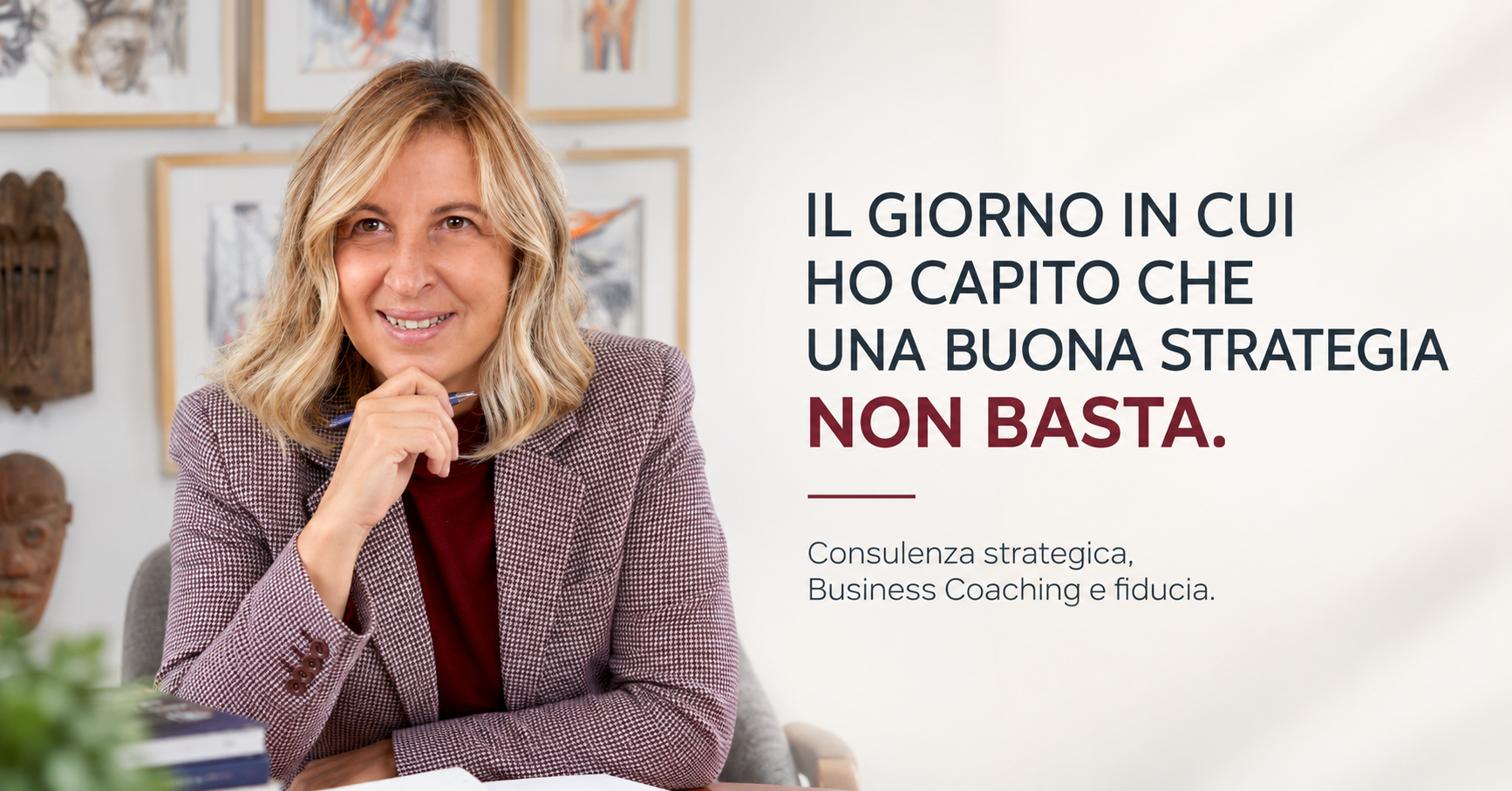
Lest’s work together
If you are guiding your company through growth or international expansion and feel that strategy alone is not enough to bring people with you, let’s talk. Write to me or connect with me on LinkedIn. We will start with your perspective — not a ready-made solution.
Frequently asked questions
What is business coaching for entrepreneurs?
It is a process that helps entrepreneurs and managers turn vision and strategy into action. Rather than offering ready-made answers, it creates the conditions — trust, connection and awareness — that help people recognise new possibilities and make decisions they genuinely own.
What is the difference between strategic consulting and business coaching?
Strategic consulting provides experience, method and vision: it analyses the market, identifies opportunities and shapes strategies for growth and international expansion. Business coaching focuses on the human and relational conditions that allow those strategies to be understood, embraced and implemented. The two approaches complement each other.
Why does a sound business strategy sometimes fail?
Because a strategy delivers results only when the people responsible for implementing it understand it, believe in it and make it their own. Without trust and strong relationships, even the best plan will remain on paper.
Does business coaching replace strategic consulting?
No. In this approach, coaching does not replace consulting; it strengthens it by making it more likely that the strategy will be put into practice.
Who is this approach for?
It is designed for entrepreneurs and SMEs pursuing growth and international expansion who want to combine a clear strategic vision with the ability to engage their people and support meaningful change.